
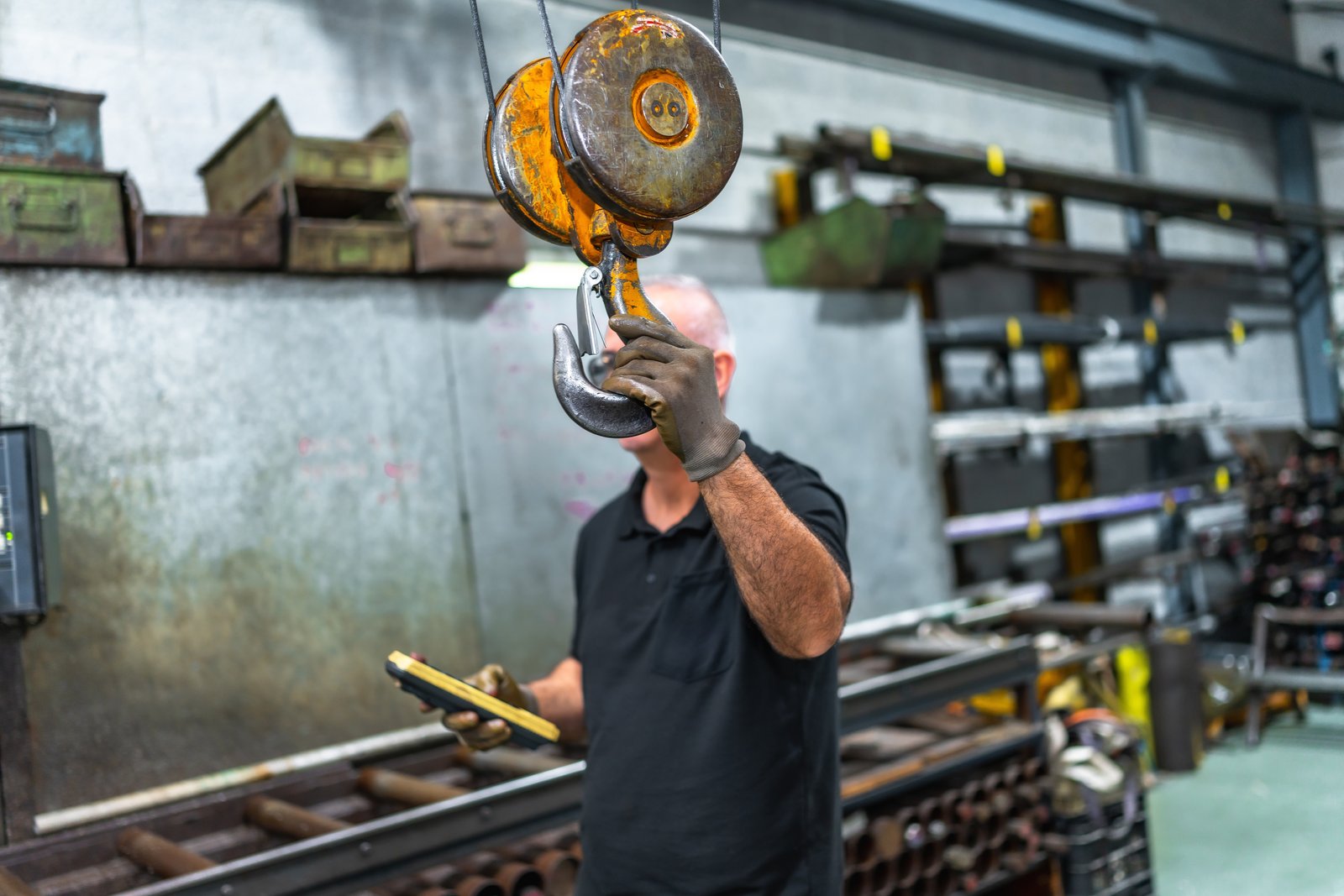
Workers’ compensation pays for medical care and a share of lost wages when a member of your crew is hurt on the job, whether the injury came from a dropped load on a rigging lift or a slow strain from years under machine bases. A millwright company needs it because the work is physical, the loads are heavy and the crew is in other people’s plants.
Few trades put a body next to as much stored energy as this one. A crew sets a press on skates, jacks a base, torches a bracket overhead and works a mezzanine edge, all in a day. The policy is built around that reality, and it is priced and audited around payroll, so how you keep your crew records matters as much as the form you buy.
Your crew, and who else’s claim it is
Picture a hand caught between a base and a jack on a Tuesday. The clinic bills go to the policy, and so does a share of the pay he misses while he heals. Nobody has to prove the foreman rigged it badly; the test is whether the injury came out of the job. Months later a lawyer may write to the company anyway, naming it in a suit about that same injury. Employer’s liability is the protection written into the same policy for that letter.
It does not answer for people who are not on your payroll. A plant employee struck by your swinging load, or a visitor hurt walking past your staging, is a general liability question. A suit that outruns the employer’s liability limit is where umbrella insurance sits above it. A crew member hurt in a collision between jobs may bring both this policy and commercial auto insurance into the file. And the customer’s machine damaged in your care is a matter for the riggers’ section of property insurance, not here.
The injuries this trade produces
Lifting and rigging. Loads drop, swing and shift. A chain or sling that fails, a gantry that racks, a come-along that slips: each of these hurts the person nearest the load, and the injuries are severe. Rigging plans, tag lines and exclusion zones reduce the exposure, but they do not remove it, and a crew working a tight plant aisle has little room to step clear.
Falls. Mezzanines, platforms, equipment pits, ladders and lifts. A millwright works at an edge with a tool in both hands, on a surface somebody else built.
Crush and pinch points. Jacks, skates, machine bases, rollers and the gap between a moving machine and a column. Hands and feet are the common casualties, and the claims are expensive because the injuries are lasting.
Sparks, slag and the welding flash. Field welding and cutting throw sparks and slag, and flash burns come from an arc struck without the shield down. Smoke and fume exposure belong in the same conversation.
Repetitive strain. Wrenching, pulling, kneeling and overhead work wear on shoulders, wrists and knees. There may be no single accident to point to, which is why these claims need records kept from the first complaint.
The outage is awarded in a state away from home. The owner tells the agent which states and which dates. The insurer arranges coverage for that work. The certificate goes to the plant, and the crew is badged. No figures are shown.
Shutdown crews and work in other states
A plant shutdown compresses everything: long shifts, a crew swollen with temporary and traveling workers, and a fixed window that does not move. Tired people working fast around loads are where injuries cluster, and a crew added for the outage has the least familiarity with the plant’s layout.
A shutdown can pull a crew across state lines. Coverage for work outside your home state needs to be arranged with the insurer, and the rules vary by state. Do not assume that a policy written for your home base follows the crew automatically. Tell your agent which states an outage will touch before the crew leaves, and ask how the policy is written for work there. State detail will live on our locations pages. The U.S. Department of Labor keeps a directory of state workers’ compensation officials for the rules themselves. A crew lead who knows the next job is across a state line should say so when the bid goes out, because the answer can change what the policy needs to say.
Temporary labor deserves the same early notice. Laborers hired for the outage week work beside your own people on the same loads, and a hurt temp is a claim somebody has to answer for. Settle whose policy that is before the first shift, not after the first incident report.
The audit that follows the term
Once the policy period closes, the insurer reviews your payroll books and your subcontractor payments. Money paid to a sub or a temp laborer who cannot be shown to carry coverage elsewhere may be read as crew payroll. Keep pay records by person and job, keep the sub file current, and tell your agent mid-term when the crew changes shape. A busy outage season changes the payroll the policy was built on, and the audit is where that catches up. Owners who sort the books by person and by job each month find it routine; owners who rebuild a season from memory do.
Under a sub with a certificate, the sub’s crew sits on the sub’s own policy and your file holds the proof. Under a sub without a certificate, the sub’s crew can be counted on your policy at audit, and the file is missing the proof. No figures are shown.
Subcontractors, temporary workers and the certificate
Collect proof of workers’ compensation from every sub before the sub’s crew steps on the job. A certificate in the file shows the sub’s own insurer answers for the sub’s workers. Without it, an injured sub’s worker may look to you.
Whether a person is an employee or an independent contractor is not decided by what the two sides call it. The U.S. Department of Labor and the IRS each publish guidance on how that question is looked at, and a laborer treated as a sub who works under your direction, with your tools, on your schedule, may be treated as an employee. Read those sources and bring the borderline cases to your agent.
Temporary workers from a staffing firm are a different arrangement again. Ask for the agency’s certificate, and ask your agent how leased workers are handled at your audit. An owner who works on the tools has a separate decision: whether to be included or excluded on the policy. An excluded owner has no workers’ compensation benefits from it, so the choice should be made on purpose.
Before the plant badges your crew, it will ask for proof of this coverage. That request is routine, and a certificate on file lets you answer it the same day.
Common claim categories
Struck-by and caught-in injuries. A load, a tool or a machine part hits or traps a worker: the claim covers treatment and wage replacement through recovery.
Falls from height or into a pit. Fractures and head injuries from a platform, a mezzanine or a lift, with a long recovery.
Welding flash and slag. Flash, slag and spark injuries from cutting and welding in the field.
Cumulative strain. Shoulder, back and knee injuries that build over time, with the date of injury in question.
What you choose and what is set for you
The benefits side follows the rules of the state, so you are not shopping for a benefit level there. Your choices sit elsewhere: the protection for employer’s liability suits, how owners and officers are treated, how work in other states is handled, and what the audit asks of you. The wording on your policy decides each, so read those pieces before you sign.
Why Millwright Business Insurance
Before we price a crew we want the facts a shutdown turns on: the states the outages reach, the share of labor that is temporary or subcontracted, and whether the owner is on the tools. Underwriters who already write lifting and rigging crews see the file, and we read what they send back for owner treatment, out-of-state handling and audit terms. Questions that start from the work rather than the policy are answered on the millwright insurance page.