
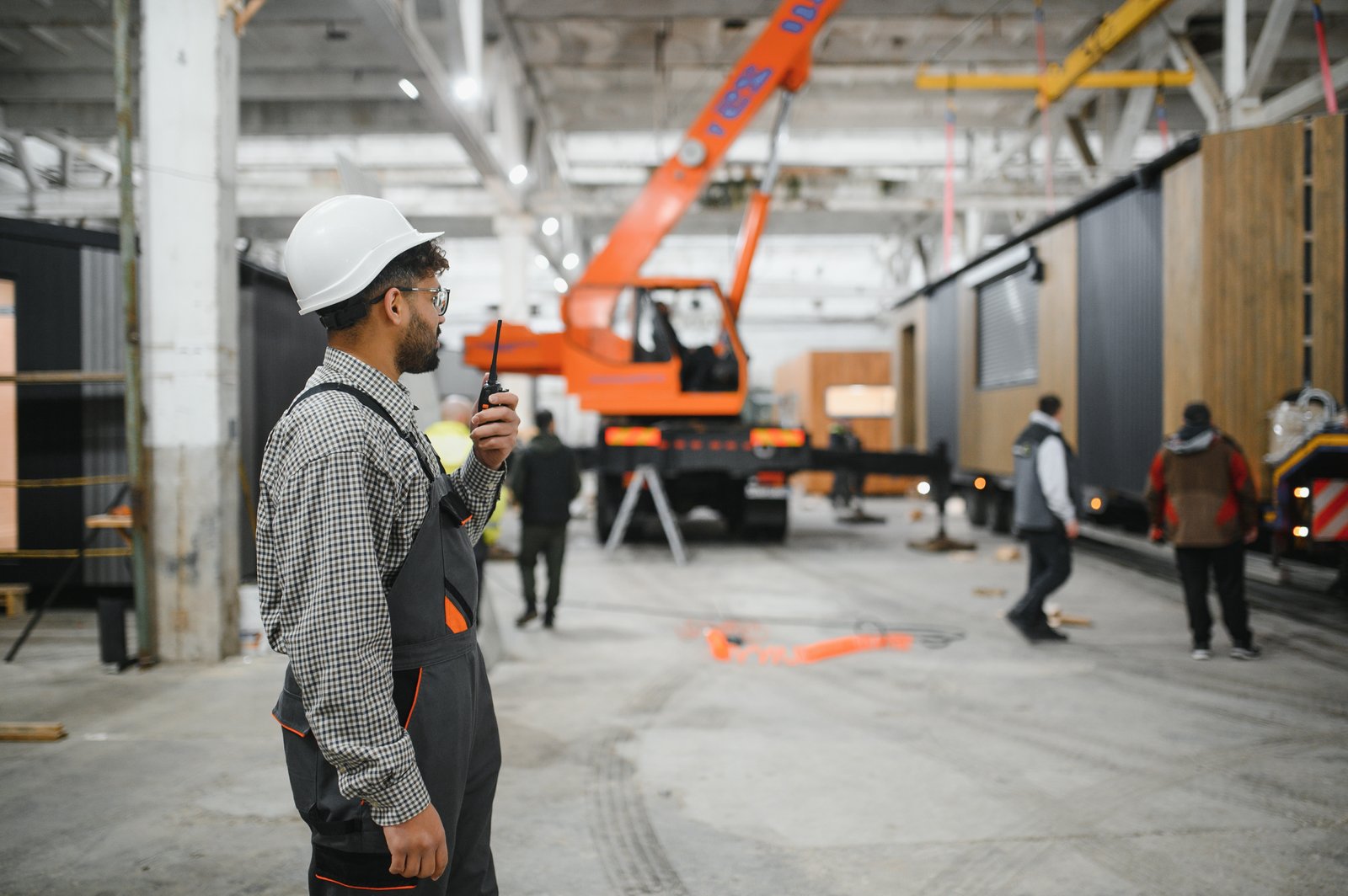
Picture the crew truck pulling a lowboy toward a plant on the morning of a shutdown. Commercial auto insurance is the policy built for what that rig does to the road and the people on it, and for the rig itself if it is wrecked, stolen or burned. For a millwright contractor the rig can be a crew pickup, a service-body truck, a tractor or a utility trailer.
A millwright fleet is not a delivery fleet. The trucks leave loaded with skates, gantries, jacks, cribbing and gang boxes, sometimes with a crane or a welder bolted to the body, and a shutdown can put several crews on the road at once. Those loads and those schedules shape the questions an insurer asks, and they are the reason a standard fleet application can miss half of what you drive.
Road losses and the losses that ride along
Picture a service truck that rear-ends a car at a plant entrance while the lowboy behind it swings into a light pole. Two people now have claims against your company, the car’s driver and the pole’s owner, and liability coverage is what pays them and defends you. Your own truck and trailer need repair too, which is the job of physical damage coverage, if the policy carries it. Medical payments and uninsured motorist coverage are described on the policy as add-on protections for people in your vehicles; check how each is worded on the form.
The press or compressor on the deck is another matter. A customer’s press or compressor riding on your trailer is the customer’s property in your care, and that is a question for the riggers’ liability section on the Property page, where the installation floater and transit coverage are described. Your driver’s injuries in the same wreck are paid through workers’ compensation. And a judgment that runs past the underlying limits is the job of umbrella insurance.
Where a crane or forklift is used as equipment at a plant rather than driven on the road, the question may move to general liability. Ask how each unit is classified; the answer can change with what the machine is doing when the loss happens.
Owned, hired and borrowed units
Start with the units titled to the company: the crew pickups, the service trucks, the tractor, the lowboy and the utility trailers. Each is listed on the policy, and the insurer wants to know what it hauls and how far it goes. A pickup that carries a gang box is not the same exposure as a truck that hauls a gantry, and the application should say so.
Rentals come next. A millwright company that rents a tractor for one large move, or a truck for a shutdown when the crew outgrows the fleet, is exposed in a vehicle it does not own. That exposure is added to the policy by endorsement and is not assumed. If a rental is planned, tell the agent before the pickup, and keep the rental agreement; its terms and your policy have to be read together.
Then there are the vehicles the company never owned: a millwright’s personal truck sent to collect bearings for a job, and a trailer lent by another contractor for a week. When one of them is in a wreck on company business, the injured party can bring the company into the claim. Policies differ on how this is written, so the question is not whether a driver owns the truck but whether the policy you hold responds when the trip is for you.
Borrowed trailers deserve their own line. When another contractor lends a drop-deck, two policies and one agreement decide who answers. Read them before the trailer leaves the yard.
Mounted units and carried gear sit side by side. Mounted on the truck: the crane or welder bolted to a service body, and the body itself. Carried in the truck: skates, jacks, cribbing and alignment tools in a gang box. The first group is a question for the auto policy; the second is a contractor’s equipment question on the Property page. No figures are shown.
Mounted on the truck or carried in the truck
Millwright trucks carry more than a pickup bed full of tools. A crane, a welder or a compressor can be permanently mounted on a service body, and the auto policy has to decide whether that equipment is part of the vehicle. The wording on your policy decides, and naming each unit up front on the schedule keeps the answer from being argued after a loss.
Tools carried in the truck are a different question. Skates, jacks, cribbing, alignment tools and the gang box that holds them are contractor’s equipment, and they belong on the Property page, not the auto policy. A truck stolen with its tools can be two claims in two policies, and a clean map of what is attached and what is simply inside avoids a gap between them.
Mounted equipment also changes how the insurer rates the unit. A service body with a crane is a heavier, more specialized vehicle, and the underwriter will want to know about it. Be exact about what is bolted down.
A crash with a loaded lowboy sits at the start, with labeled lines to the policies that answer it: the auto policy for the injury and damage on the road, the riggers’ section of the Property page for the customer’s machine on the trailer, workers’ compensation for the injured driver, and umbrella for a loss above the underlying limits. No figures are shown.
The crash, the load and the driver
A wreck with a loaded lowboy can raise several separate questions. The auto policy answers for the injury and damage on the road and for your own units. The customer’s machine on the trailer is the riggers’ question on the Property page. The crew member at the wheel is a workers’ compensation matter. A large judgment may reach the umbrella.
The point of separating them is that no single policy is built to cover all four. Contractors get into trouble when they assume the auto policy is the policy for anything that happened in the truck. Sorting a loss this way, before one occurs, tells you which questions to put to the agent and which documents to keep.
Rules for heavier units and interstate trips vary, and the agent asks about each unit and route. Where the crew works matters, and the locations page is the place for state detail.
Who drives
Insurers review the motor vehicle record of each person who drives a company unit, and a driver who is not on the list is a risk the insurer has not priced. A new hand who takes the crew truck on a Monday morning, a foreman’s son who moves the tractor across the yard, an apprentice sent to the supplier: each is a driver question, and the form decides how it is treated.
Crews traveling between plants for a shutdown raise the same issue in a larger form. Several drivers, long days, unfamiliar roads and a schedule the plant does not move. Tell the agent who is likely to drive, and give the agent each new name before that person’s first trip. A driver policy built around two or three names will not fit a crew that doubles for a shutdown.
Common claim categories
Collisions with other vehicles. The plainest claim: injury and damage to the people and vehicles you hit, and the repair of your own unit.
Trailer and load incidents on the road. A trailer that sways, a unit that backs into a plant dock, a load that shifts and strikes another vehicle. The crash is an auto claim; the machine on the trailer is a riggers’ claim.
Theft and weather damage to the unit. A service truck stolen from a jobsite, or a trailer damaged in a storm, falls under physical damage coverage when that coverage has been purchased.
Non-owned and hired claims. A claim from an employee’s own pickup or a rented tractor, where the question is which policy responds first.
How the limits and deductibles are chosen
A commercial auto policy is built on a limit for each accident, a deductible for physical damage and options for medical payments and uninsured motorist protection. The limits and deductibles are chosen with the agent, and the plants you work for may set a floor in their contracts. We do not publish figures here; they belong in a quote written for your fleet.
Ask how the policy treats each type of unit, how hired and non-owned auto is written, and whether mounted equipment is scheduled. If a plant’s contract asks for more than the primary policy carries, that gap is what umbrella insurance is meant to fill, stacked above the auto liability.
Why Millwright Business Insurance
A millwright fleet does not read like a list of pickups, and we do not treat it as one. Before any submission goes out, we walk the yard with you in words: what each truck hauls, what is bolted to it, who sits behind the wheel, whose pickup makes the parts runs and which rentals are coming. The file goes to underwriters comfortable with a crane on a service body and a gantry on a lowboy. When the quotes return, we flag how rentals and borrowed trailers are handled, what becomes of mounted equipment, and the line where the auto policy ends and the riggers’ section begins. Questions that start from the work rather than the policy are answered on the millwright insurance page.